
Will my Surveyor Check the Attic During a Pre Purchase Structural Survey?

The quick answer here is yes!
The attic is a vital part of a survey and gives a great indication into the condition of the structure, roof and services.
During the survey, the surveyor will get into the attic and document their findings including any defects identified in their report.
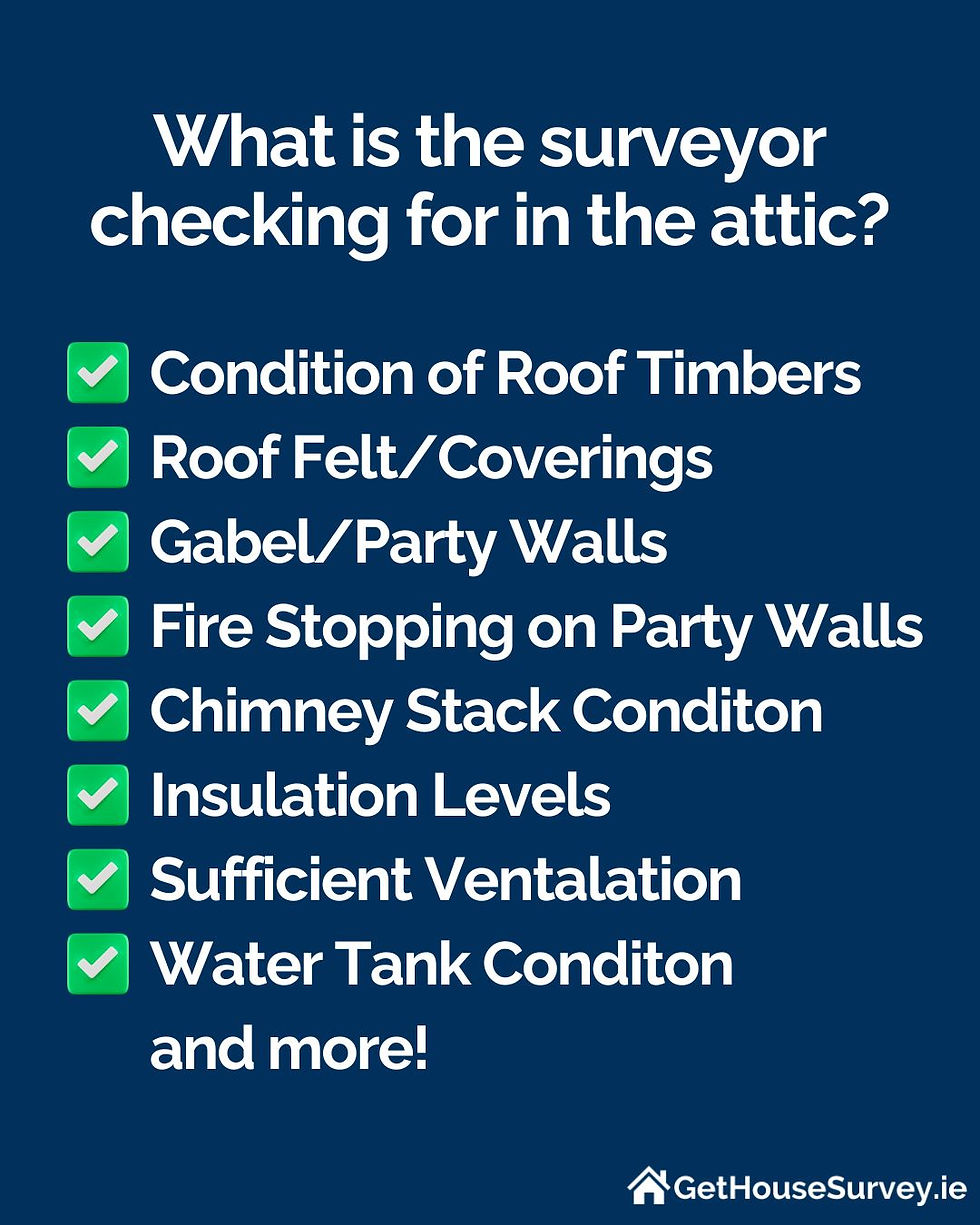
There is a long list of items for the surveyor to look out for. These include:
1: Condition of Roof Timbers
You can only see the roof timbers from inside the attic. With these the surveyor is looking for signs of damage, deflection, damp, rot, woodworm etc.
2: Roof Felt/Coverings
In most cases, behind the roof tiles/slates there will be felt or some other membrane. Over time this can wear down and become damaged. Replacing this is a costly job so if there any signs of damage or wear and tear, these will be noted in the report.
3: Gabel or Party Walls
These are often the first walls to show signs of structural defects, so seeing as much of them as possible is important for the surveyor to access the condition.
4: Fire Stopping on Party Walls
The top of party walls (the wall between 2 houses) should have fire stopping in place. This is a material that will prevent smoke and flames from spreading from one property to the other through the attic.
In older properties, it is common to not have this in place or to have big gaps in the party wall. If this is the case it will be noted in the survey.
5: Chimney Stack Condition
In most properties, part of the chimney stack will pass straight through the attic. This gives the surveyor as great chance to inspect for any cracking or other damage. The chimney stack is part of the structure of the home, so any issues can be serious or costly to repair.
6: Insulation Levels
The attic is like a hat for your home. It should keep the warm in and let as little cold in as possible. So the surveyor will be commenting on the levels of insulation that are visible and will flag if it is not up to current standards.
7: Sufficient Ventilation
A well ventilated attic will be a dry attic. If there is not sufficient ventilation it can lead to trapped moisture which can result in damp and rot in the attic.
8: Water Tank Condition
The surveyor will be noting the condition of the water tank, ensuring it is made of the correct material, correctly insulated etc. This can be particularly as older tanks made out of various metals are prone to rusting and leaking and some insurance companies will not cover you if your tank was not up to standard.
Frequently Asked Questions - Attic Inspections
Q: Do I need to specifically request the attic to be inspected?
A: No, the attic is inspected as standard as part of every pre purchase structual survey.
Q: What if there is no ladder at the property?
A: This is not a problem. Our surveyors carry their own telescopic ladder to access the attic.
Q: Is there ever a case where the attic can not be inspected?
A: It is rare, but yes. If it is not possible to access the attic safely or if the access hatch has been blocked or sealed shut, the surveyor will not be able to inspect. This will be clearly labeled as a limitation on the report. This happens in about 1 in 50 properties.
Q: How will I know how serious any issues with the attic are?
A: Any issues we identify get a Condition Rating from 1-3 with 3 being the most serious or urgent. The surveyor will also include comments describing the issue and on recommend action. This means you'll know how serious/urgent any issues are.
Q: I'm buying a top floor apartment with the attic above. Can this be inspected?
A: This depends on whether or not the attic is accessible from inside the apartment. If it is, then yes. The surveyor can inspect it as part of the survey If the attic is not accessible form inside the apartment, only the management company can give permission to access it.
Sale Agreed and Ready to Book Your Survey?
Just go to GetHouseSurvey.ie and select your property type to get started!


Comments